On October 1, 2008, I crossed a line I never expected to cross.
I went from physician… to patient.
For years, I had stood beside patients and families during some of the most frightening moments of their lives. I understood disease. I understood treatment. I understood the language of medicine.
But nothing could prepare me for the moment when the diagnosis belonged to me.
I found a lump in my right breast.
It was cancer.
When Everything Changed
My breast cancer diagnosis came during an already difficult season of life. My mother, my best friend, had been terminally ill for the previous three years, and my father and I were her caregivers.
I was a physician, a mother, a daughter, and a caregiver — roles that required me to remain strong for everyone around me.
Like many healthcare professionals, I had been trained to hold it together.
We learn to compartmentalize.
We learn to push through.
We learn to deliver devastating news and then move on to the next patient.
Composure becomes competence.
But I learned something important through my own experience:
Holding it together is not the same thing as healing.
The Reality Behind the Diagnosis
My treatment journey included a partial mastectomy, a Level I lymph node dissection with 16 lymph nodes removed (three positive for cancer), 15 rounds of chemotherapy, and 33 radiation treatments.
Then, after only three rounds of chemotherapy, another life-threatening complication emerged.
I developed crushing chest pain and was diagnosed with a congenital cardiac anomaly that caused my right coronary artery to become more than 80% blocked.
Twenty-two stents were attempted.
None worked.
I was deemed inoperable and sent home with lifelong medication.
At 41 years old, I was facing aggressive breast cancer, a potentially life-threatening heart condition, and the impending loss of my mother.
Four weeks after leaving the hospital, my mother died.
The Weight of Caregiving
As a woman of faith, I understood that I was saying goodbye to my mother’s body — not her spirit.
But that body carried me.
It fed me.
It held me.
It protected me.
Watching her mortality while questioning my own felt like living in a paradox.
There was no space between grief and survival.
I wasn’t just grieving my mother.
I was grieving while trying to stay alive.
And in that season, I came to understand something I had previously only observed as a physician:
The incredible weight caregivers carry.
The invisible calculations.
The constant vigilance.
The way caregivers place their own pain on hold because someone else needs them more.
When Survivorship Became Another Diagnosis
I eventually completed treatment and believed the hardest part was behind me.
I was wrong.
In 2010, after participating in my first Susan G. Komen 3-Day walk in Chicago, I experienced another life-changing diagnosis:
Lymphedema.
The lymphatic system damage caused by cancer treatment resulted in permanent swelling of my right arm, hand, and fingers. The condition made performing clinical duties impossible.
And then I heard words no physician, patient, or human being should ever hear:
“A physician who is not clinically capable is of no value to me.”
At that moment, after cancer, heart disease, and loss, I questioned my own value.
But my story was not over.
From Survival to Purpose
I had a choice.
I could focus on everything I had lost.
Or I could take inventory of what I still had.
That choice changed everything.
I realized my life was not over.
It was being recreated.
That realization led me to become the Susan G. Komen 3-Day National Spokesperson, where for six years I traveled across the country educating thousands about breast health and survivorship.
But it also opened my eyes to another unmet need:
The millions of people living with lymphedema who lacked access to the resources necessary to manage their condition.
The Birth of LIVE Today Foundation
In 2017, I founded the LIVE Today Foundation with a mission to provide medically necessary compression garments to under-resourced cancer patients and survivors living with lymphedema.
Because survival should not mean suffering silently.
Since its founding, LIVE Today Foundation has provided more than 700 sets of free compression garments to cancer survivors across the United States.
Because survivorship is not the finish line.
Quality of life matters.
A Message for Healthcare Professionals
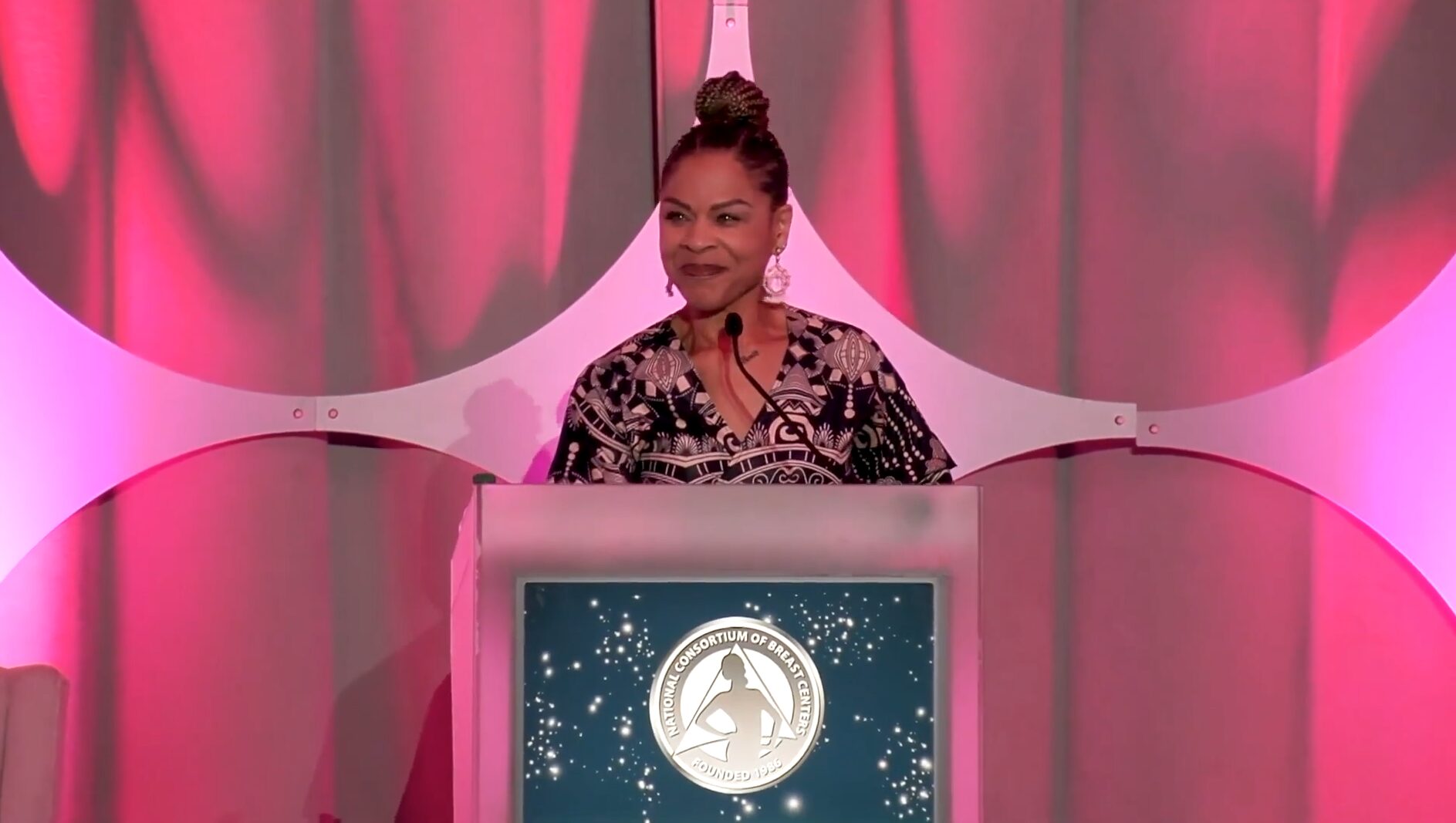
My keynote at NCBC was not simply my story.
It was a reminder.
Every patient sitting in front of us has a story beyond their diagnosis.
They have fears.
They have dreams.
They have families.
They have a life they are trying to reclaim.
As healthcare professionals, we have the privilege and responsibility to care for the whole person — not just the disease.
Treatment saves lives.
But compassion, advocacy, and survivorship support help people truly live.
Watch the Full Keynote
From Diagnosis to Destiny: Transforming Trauma into Purpose in Breast Cancer Care
Opening Keynote
National Consortium of Breast Centers (NCBC)
35th Annual Interdisciplinary Breast Center Conference