
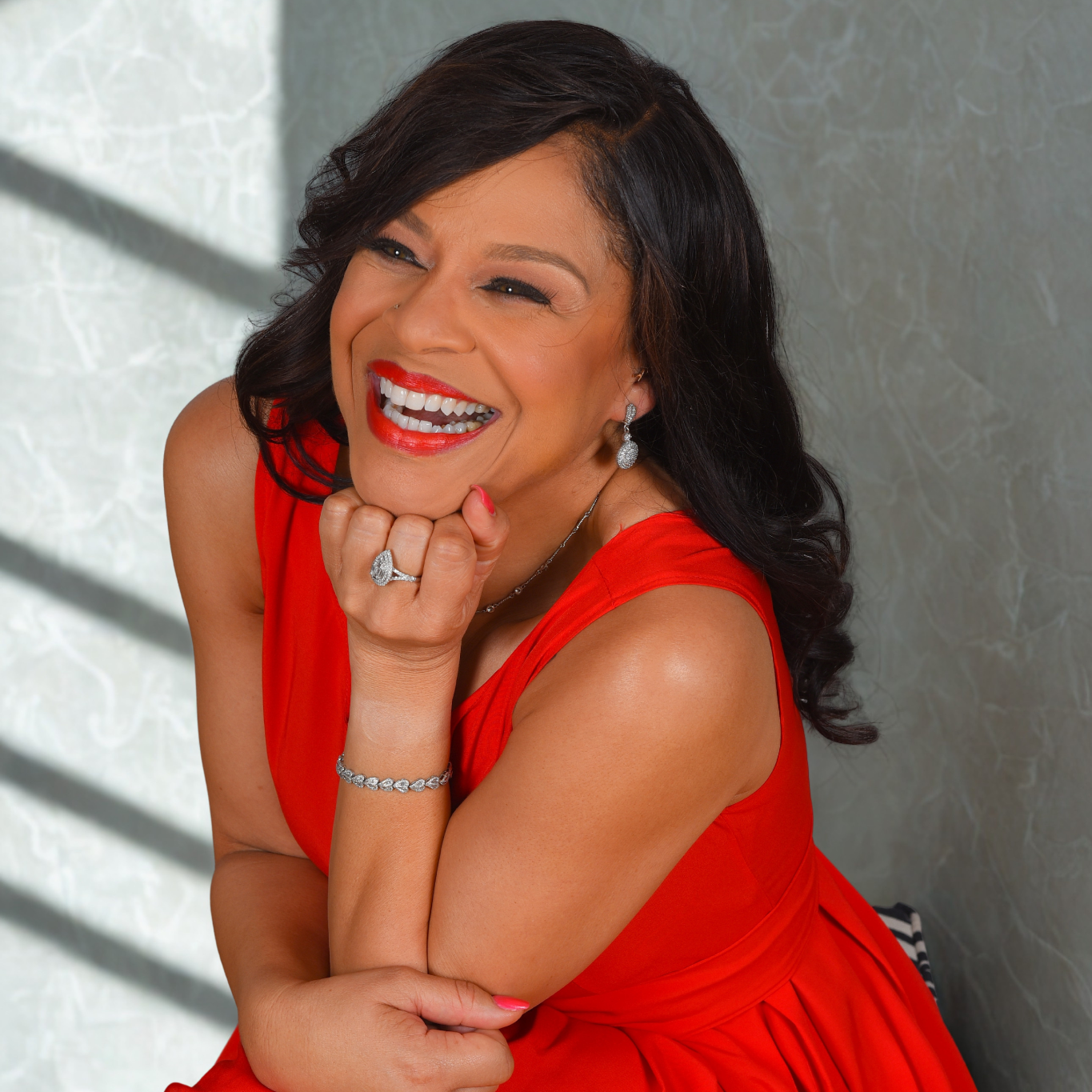
By: Aryana Hadjimohammadi
Aryana Hadjimohammadi is a journalist and writer, passionate about health, medicine, and patient-centered storytelling. Through her reporting, she explores the intersection of healthcare, research, and lived experiences to help readers better understand complex health topics.
Editor’s Note from Dr. Sheri®: I’m deeply grateful to Aryana Hadjimohammadi for taking the time to tell my story with such care. I hope that wherever you find yourself today, this story reminds you that even life’s most difficult chapters can become the foundation for purpose, hope, and service.
“As a physician, I knew the importance of treating the disease. As a patient, I learned that healing requires so much more—it requires caring for the emotional wounds that come with the diagnosis.”
The Diagnosis That Changes Everything
When Dr. Sheri Prentiss was diagnosed with breast cancer, her world shifted in an instant. “One minute you didn’t know you had it, and the next minute you do, but your identity doesn’t catch up that quickly,” Prentiss said.
Before she had time to process what the diagnosis meant for her own life, she felt pulled into managing everyone else’s emotions. “Before you’ve had a chance to really process what it means for you, you’re suddenly responsible for helping everyone else process it too,” she said.
As a doctor, she could parse the language in her reports. As a patient, those details faded into the background.
“As a physician, I understood the medical terminology, but as a patient, none of that mattered in the moment,” she said. “I wasn’t thinking about pathology reports. I was thinking about my daughters. I was thinking about my mother who was dying. I was thinking about whether the people I loved were about to lose me.”
“As a physician, I knew the importance of treating the disease. As a patient, I learned that healing requires so much more—it requires caring for the emotional wounds that come with the diagnosis.”
For her, the real ordeal wasn’t getting the words out. “The hardest part isn’t really saying the words ‘I have cancer,’” Prentiss said. “The hardest part is watching the people you love realize that life has changed for them too.”
“The hardest part isn’t really saying the words ‘I have cancer.’ The hardest part is watching the people you love realize that life has changed for them too.”
Who to Tell — and When
“There isn’t one right answer because every family and friend are different,” said Prentiss.
But she offers a general rule.
“I generally encourage patients to tell people who will be walking closest beside them sooner rather than later,” she said.
You don’t need every answer before you share.
“It’s perfectly acceptable to say, ‘I know I have cancer. I don’t yet know everything else,'” said Prentiss.
Waiting for certainty, she explains, only adds weight you don’t need to carry.
“Waiting until you have every detail often places an unnecessary burden on yourself,” she said. “So, it’s okay to let people walk through the uncertainty with you.”
“Don’t wait until certainty arrives before allowing yourself to receive support,” she added.
Not everyone needs to know right away — or at all.
“If you don’t take the opportunity to process it yourself, you’ll babble,” she said. “You’ll just be talking, and they won’t even be able to process it. You won’t even know how much to share or when to share.”
Taking time to process isn’t selfish. It’s necessary.
“Everybody is not meant to travel down this journey with you,” Prentiss said. “Some people may be more of a hindrance than a help. So, you need the time to process to understand for yourself, who do I want on this journey with me?”
“Who is safe?” she added.
How to Start
When it comes to beginning the conversation, Prentiss cautions against overthinking or rehearsing the perfect words. Sharing a cancer diagnosis isn’t a presentation, she explains. It’s simply a difficult truth being shared with someone you love—and sometimes the most powerful approach is the simplest one.
Keep it simple.
“I often tell patients to keep that first conversation very simple and start with something like, ‘I have something difficult to share. I’ve been diagnosed with cancer. I’m still learning exactly what this means, but I wanted you to hear it from me first,’ and then stop,” she said.
Then give the other person room.
“Silence is okay,” Prentiss said. “Give people room to absorb it and then go from there.”
And don’t feel pressured to answer every question.
“Only as much as you’re emotionally ready to share,” she said. “You’re not obligated to answer every question simply because someone asked.”
“Sometimes all you know is that you have cancer,” Prentiss added. “Sometimes that’s going to need to be enough.”
Tailoring the Message
Prentiss approaches each relationship differently.
Spouse or partner:
“If it’s your spouse or a partner, invite them into the journey because you are no longer carrying this alone,” she said.
Young children:
“Children usually imagine something worse than reality, so keep that in mind,” she said. “Be truthful. Be honest. But use age-appropriate language that helps them understand what’s happening without creating unnecessary fear. When children don’t understand something, their imaginations can quickly take them to the worst-case scenario.”
The interviewer asked Prentiss how a parent should respond when a child asks, “Are you going to die?”—a question she had to navigate with her own children.
“With a young child, you want to be truthful, but you also want to use age-appropriate language,” Prentiss said. “I don’t believe in simply saying, ‘No, I’m going to be fine,’ because that’s a promise you can’t honestly make.”
Instead, she recommends honesty with hope.
“Remind your children that none of us knows how much time we have or what the future holds,” Prentiss said. “But you can also reassure them that you don’t believe this is your time to go and that you’re going to do everything you can to be here.”
For Prentiss, that meant telling her children exactly what she was still fighting to see.
“I want to see you graduate from high school. I want to see you off to prom. I want to be at your weddings. I want to be there for the birth of your children. I can’t guarantee what life holds for me, but I can tell you this: I’m going to do everything I can to live, to live fruitfully, and to be here with you.”
That commitment also meant helping her children understand why she was willing to endure difficult treatment.
“When my doctor tells me I need chemotherapy, I’m going to get chemotherapy. If I need radiation, I’m going to get radiation—because Mom wants to be here for you.”
Adult children:
Parents often instinctively try to protect their children, even when those children are fully grown. Prentiss encourages parents to resist that instinct and allow adult children to step into a supportive role.
“No matter how old our children get, we still tend to think of them as our children and want to protect them,” she said. “But your adult children are grown, and they love you. They may desperately want the opportunity to support and care for you. Be honest with them—and give them permission to show up for you.”
Telling Her Dying Mother
Prentiss had planned to wait before telling her mother, who was already receiving inpatient hospice care. But her mother noticed the hospital band still around her wrist.
“My mom had become a patient expert by then,” Prentiss recalled. “Just as I was getting ready to walk out the door, she said, ‘Baby, why you got that? Why you got that thing on your wrist?’ And I thought, ‘Ah, shoot! I forgot to take it off.'”
Prentiss explained that she’d undergone testing. From that day forward, her mother asked about the results every time she visited.
So when the diagnosis finally came, Prentiss knew she couldn’t hide it from her.
What she hadn’t anticipated was how profoundly her own diagnosis would change the way she felt about her mother’s impending death.
“I had already accepted that my mother was dying,” Prentiss said. “As painful as that was, I had come to terms with the fact that I was going to lose her. But when I was diagnosed with cancer, suddenly I had to wrap my head around something entirely different: How was I going to fight for my own life without my mother here?”
Her thoughts immediately turned to her children as well.
“I wondered whether my children were going to experience two funerals in close succession—their grandmother’s and then mine. I wondered whether I would be well enough to help my mother through her final days. And I wondered whether I, too, would eventually end up in inpatient hospice.”
Against that backdrop, her mother’s response to the diagnosis became a moment Prentiss would never forget.
For nearly three years, as birthdays and holidays came and went, her mother had repeatedly wondered aloud, “I don’t know why I’m still here.”
“When I told her I had breast cancer, my mom—who was very weak at the time—sat up in her bed and said, ‘I know as your mom, I’m dying, and I really can’t help you, but no baby should get that diagnosis without her mom by her side. Now at least I know why God has kept me here.'”
In that moment, the woman who had questioned why her own life had been prolonged believed she had found her answer: she was still there to be a mother to her daughter when her daughter needed her most.
“People remember how safe you made them feel, not how many solutions you offered.”
What Helps — and What Hurts
The best response? Presence, not advice.
“My favorite response isn’t advice,” Prentiss said. “It’s presence. It’s saying, ‘I’m here. You’re not alone. How can I help?'”
She cautions against the familiar phrase, “Let me know if you need anything.”
“The intention is wonderful, but the problem is that patients often don’t know what they need—or we’re simply too overwhelmed or exhausted to ask for it,” she said.
Instead, loved ones can ask, “How can I help?” or, better yet, offer something specific.
“Cancer takes away so much of your autonomy. Receiving help shouldn’t feel like one more decision someone else is making for you.”
“When people asked me directly, it gave me permission to say, ‘I’m too sick to grocery shop. I may not be able to eat, but my children still need to eat. Could you bring groceries or pick up something for them?’ There were times I was simply too weak to cook.”
Help doesn’t always have to mean doing something, either.
“Sometimes you can simply ask, ‘Would you like me to listen? Do you need a sounding board?’ Not every problem needs to be solved.”
For Prentiss, the distinction comes down to creating emotional safety.
“People remember how safe you made them feel, not how many solutions you offered.”
“Faith doesn’t require us to explain another person’s suffering. Sometimes faith simply asks us to sit beside them in it.”
The hurtful ones:
Prentiss has heard plenty of well-intentioned comments that landed painfully—enough, she says, to fill nearly an entire chapter of her memoir.
One of the most common is, “I know exactly how you feel.”
“Even if you’ve had the same diagnosis and the same stage of cancer, you don’t know exactly how I feel,” Prentiss said. “You’re you, I’m me, and our circumstances are different. Every person’s cancer experience is uniquely their own.”
Comparisons can be equally unhelpful.
“Someone would say, ‘Oh, my aunt had cancer. She lived for 20 years until she lost the battle.’ And I’d think, ‘Oh, okay. Well, that wasn’t very helpful,'” she recalled. “Every cancer story is different.”
She also cautions against trying to rush someone toward positivity or meaning.
“‘Everything happens for a reason’ may be something a person eventually comes to believe for themselves, but they may not be ready to hear it from someone else,” Prentiss said. “And don’t tell someone, ‘You just have to stay positive.’ Cancer patients need permission to have bad days too.”
Even words rooted in faith can hurt when offered at the wrong time.
“I’m a woman of deep faith, and my faith was essential to me throughout my cancer journey. But sometimes we use spiritual words because we’re uncomfortable sitting with someone else’s uncertainty,” Prentiss said. “Faith doesn’t require us to explain another person’s suffering. Sometimes faith simply asks us to sit beside them in it.”
For Prentiss, that distinction matters. Faith can offer tremendous comfort without being used to explain away fear, grief or uncertainty.
“Don’t rush to fix someone’s pain,” she said. “Sometimes your presence is far more healing than your words.”
“Protecting your peace is part of your treatment.”
Setting Boundaries
As calls, texts and requests for updates begin to pile up, even well-intentioned concern can become overwhelming. Prentiss reminds patients that setting boundaries isn’t selfish.
“Protecting your peace is part of your treatment,” she said.
That may mean giving yourself permission not to respond to everyone individually.
“It’s okay to say, ‘I appreciate everyone’s love and concern. Right now, I don’t have the emotional energy to respond to individual calls and messages. I’ll share updates when I’m ready.'”
Another option is to designate a trusted family member or friend as the communication hub.
“Let someone else provide updates and answer questions for you,” Prentiss said. “It can reduce the emotional exhaustion tremendously.”
“Hope is not pretending everything is okay. Hope is believing that even if everything isn’t okay today, tomorrow still has possibilities.”
Permission to Grieve
A cancer diagnosis brings losses that begin long before anything is actually lost—the loss of certainty, a sense of safety, and sometimes the life you thought you were going to have. Prentiss believes patients need permission to grieve those losses.
“You need permission to cry. You need permission to be angry. You need permission to be afraid,” she said. “Those emotions don’t mean you’ve given up hope.”
For Prentiss, grief and hope are not opposites. They can exist at the same time.
“Hope is not pretending everything is okay,” she said. “Hope is believing that even if everything isn’t okay today, tomorrow still has possibilities.”
Keep Showing Up
Support often pours in immediately after a diagnosis. But Prentiss reminds loved ones that cancer is a journey, not a moment.
“Keep showing up,” she said. “Not just the first week or during treatment. Show up the second month, the fourth month, and after treatment ends.”
By then, much of the initial support may have disappeared.
“The meals eventually stop. The phone calls slow down. Everyone else begins returning to their normal lives—but the patient may still be trying to figure out what their new normal even looks like. The appointments continue. Recovery continues. And patients still need people.”
Finding Support
Prentiss encourages patients and families not to navigate the emotional weight of cancer alone.
“Start with trusted organizations like the American Cancer Society,” she said. “Many organizations offer emotional support services and resources online.”
She also encourages patients to begin with the team already caring for them.
“Speak to a social worker. Ask your breast surgeon, medical oncologist, or radiation oncologist: ‘What resources are available through this institution? Are there local or national organizations that can provide additional support?'”
Emotional support is just as important as medical treatment.
“We get so focused on the physical aspect of cancer that we sometimes forget the psychological aspect,” Prentiss said. “I encourage every patient to seek emotional support and, if possible, find a counselor who can help them process everything they are experiencing.”
Cancer affects more than the person diagnosed. Loved ones may also struggle with fear, anger, helplessness, or grief.
“If anger or fear is directed toward you, both of you may need emotional support,” she said. “Acknowledge their emotions, allow them to acknowledge yours, and seek the right resources to help everyone process what is happening.”
A Lesson in Expectations
Looking back, Prentiss realized one of the hardest parts of her cancer journey was not only the diagnosis itself—it was navigating the gap between the support she hoped for and the support people were able to provide.
“I wish I had not had such high expectations of other people based on either what I needed in the moment or how I had shown up for them throughout my life,” she said. “Because it left me disappointed.”
That disappointment became another form of grief she had to process.
“I had to step back and ask myself, ‘Wait, do these people love me? Do they really care about me?'” she said.
Ultimately, she realized the answer was yes.
“How could these people who I know truly loved me hurt me like this?” she asked. “And I came up with two reasons: either they gave everything they could, and it simply wasn’t enough, or they didn’t know what else needed to be given.”
That realization brought her peace.
“Either way, I was holding them responsible for something they could never fulfill,” Prentiss said. “At the end of the day, what I needed, I got. It just didn’t come from them.”
“Sometimes courage isn’t having confidence that everything will be okay. Sometimes courage is simply choosing hope before certainty.”
The Courage to Share
Sharing a cancer diagnosis requires a kind of courage that has nothing to do with having all the answers.
“Sometimes courage isn’t having confidence that everything will be okay,” Prentiss said. “Sometimes courage is simply choosing hope before certainty.”
For Prentiss, some of the hardest conversations were telling her children and telling her mother.
“My children were facing a double blow,” she said. “Their grandmother was dying, and now they had to process that their mother had cancer too.”
At the time of her diagnosis, Prentiss’s mother was in the final stages of her life, and her children were deeply connected to their grandmother.
“They were already preparing for the loss of their grandmother,” Prentiss said. “And now I had to introduce a diagnosis where their mother could also die. Telling them was incredibly difficult.”
Yet even in that moment of uncertainty, she chose honesty, love, and hope.
Your Story Is Still Being Written
“Cancer changes your life, but it does not define your life,” Prentiss said. “The diagnosis is a chapter; it is not the entire story.”
“Right now, you may not be able to see beyond this moment, but I want you to know something I couldn’t fully appreciate when I was first diagnosed,” she said. “There is life after cancer. There is purpose after pain. There is joy after grief.”
“And one day, if you allow this journey to shape rather than harden you, your story may become the very thing that gives someone else hope,” Prentiss said.
“You are still here, and as long as you are here, your story is still being written,” she added.
She speaks from experience.
“I refuse to be defined by my diagnosis,” she said. “Yes, I am a breast cancer overcomer. I will shout it from the mountaintops. But I’m not shouting it because cancer was an accomplishment I wanted to achieve—I didn’t want to have cancer at all. I shout it so that somebody else can see what is on the other side of that diagnosis.”
Nearly 18 years later, Prentiss knows cancer was not the end of her story.
“It was a very impactful chapter that helped write the rest of my story,” she said. “It will continue to impact my story for the rest of my life. But it wasn’t where the story ended.”
The book is still being written.
Learn More & Get Support
No one should have to navigate a cancer diagnosis alone. Whether you are newly diagnosed, supporting someone you love, or adjusting to life after treatment, having access to trusted resources and support can make a meaningful difference.
American Cancer Society
24/7 Helpline: 1-800-227-2345
cancer.org
American Cancer Society CARES
A free mobile app offering personalized support, resources, and connection throughout the cancer journey.
Lymphedema Support & Education
National Lymphedema Network (NLN)
Provides education, resources, and support for individuals living with or at risk for lymphedema, as well as information for patients, caregivers, and healthcare professionals.
LIVE Today Foundation
Founded by Dr. Sheri Prentiss, the LIVE Today Foundation supports cancer survivors living with lymphedema through awareness, education, advocacy, and access to medically necessary compression garments.